Djurgårdsbron
Back to all places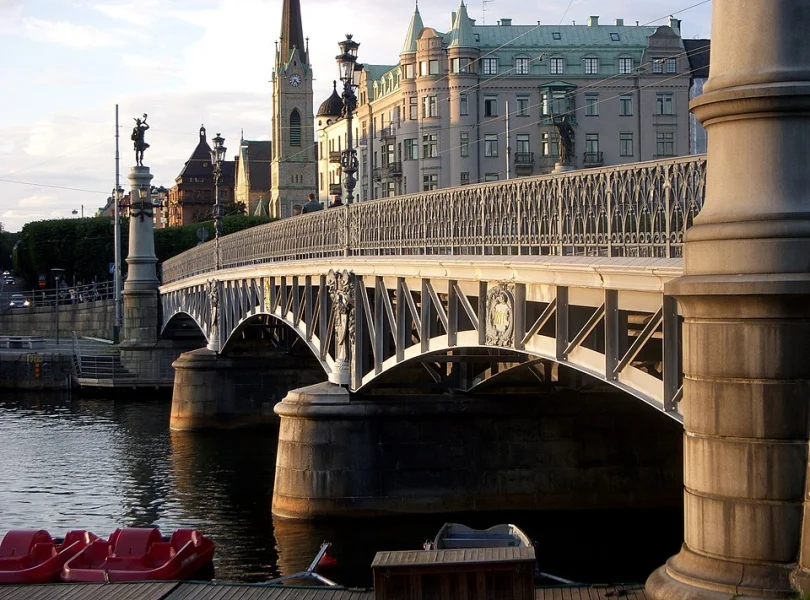
Djurgårdsbron
0:00 / 1:36Djurgårdsbron
Spanning the waters between Stockholm’s Östermalm district and the island of Djurgården, Djurgårdsbron is a remarkable example of late 19th-century bridge architecture in Sweden. The current steel structure, adorned with artistic lampposts and decorative figures inspired by Norse mythology, was inaugurated in 1897 to coincide with the grand Stockholm Exhibition, a landmark event that showcased Swedish industry and innovation.
This iteration replaced several earlier wooden bridges dating to the 17th century, the earliest of which was documented as far back as 1661 and rebuilt multiple times following damage from ice and floods. Djurgårdsbron’s four ornate portals, featuring sculptures of Norse gods such as Freyja and Heimdall, celebrate the nation’s cultural heritage and serve as gatekeepers to Djurgården, a royal park established by King John III in the late 16th century.
Over the centuries, the bridge has played a vital role in connecting Stockholmers and visitors to the island—a site renowned for historic sites like the Rosendal Palace and popular attractions such as Skansen, the world’s oldest open-air museum since 1891. Today, Djurgårdsbron is not only a vital transit link but also a living monument to Stockholm’s engineering progress, enduring as a fascinating historical asset with roots reaching back more than three hundred and fifty years. Its evolution mirrors the city’s growth, marking events from royal processions to the everyday passage of locals and tourists destined for Djurgården’s cultural treasures.
59.33107, 18.09388