House of Nobility
Back to all places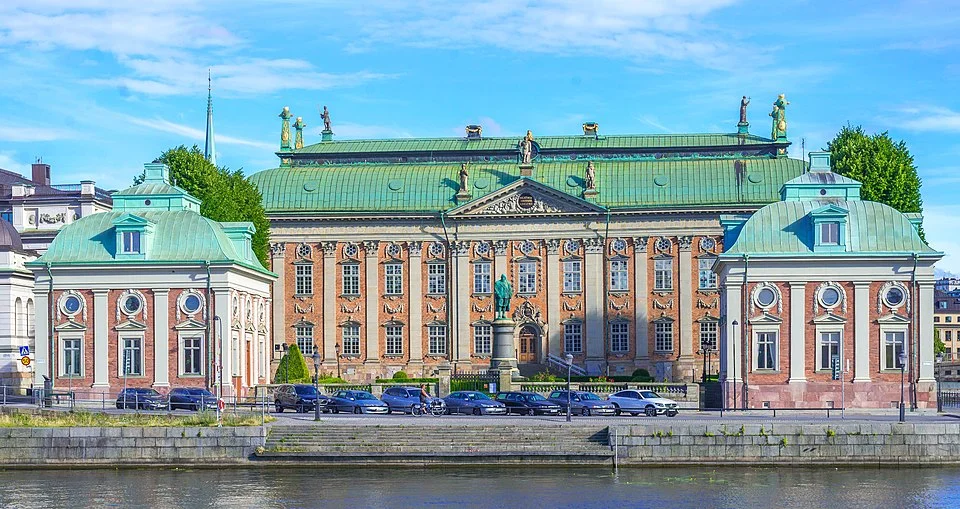
House of Nobility
0:00 / 1:50House of Nobility
Standing prominently on Riddarhustorget in Stockholm, the House of Nobility (Riddarhuset) is an architectural and historical landmark that has played a central role in Swedish history since its completion in 1674. Designed by architect Simon de la Vallée and completed by his son Jean de la Vallée, this grand building is a masterpiece of northern European Baroque style, featuring an elegant copper roof and an intricately decorated facade adorned with the coats of arms of Swedish noble families.
Commissioned in 1641, the House of Nobility was the official assembly site for the Swedish nobility during the sessions of the Riksdag of the Estates, the parliamentary system that governed Sweden from the 15th century until its dissolution in 1866. Historic debates and crucial decisions, including ones during the tumultuous period of the Swedish Empire and the Age of Liberty, took place within its walls. The building famously hosted gatherings during the reigns of monarchs such as Queen Christina and King Charles XI, witnessing significant events such as the introduction of the Instrument of Government in 1719. Today, the House of Nobility serves as a private institution that manages the affairs and heritage of Sweden’s aristocratic families. Its magnificent great hall, filled with portraits of statesmen and monarchs, and the intricate interior design reflect the nation’s aristocratic traditions. The building is also a repository of genealogical records and documents dating back centuries, making it an invaluable resource for historians and enthusiasts of Swedish heritage. The House of Nobility stands not only as an architectural gem but as a testament to Sweden’s rich aristocratic and political history, regularly offering guided tours and photography opportunities to the public.
59.32593, 18.06578