Seglora church
Back to all places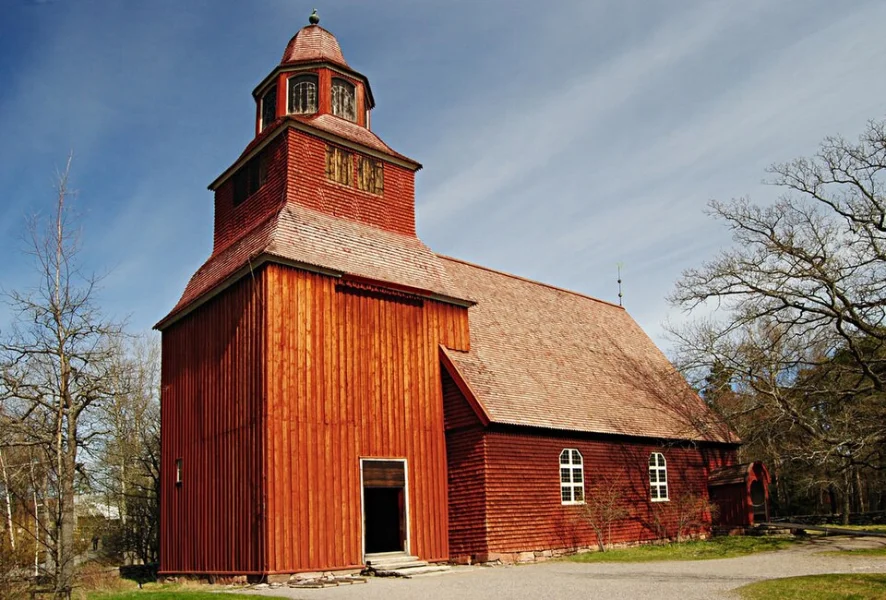
Seglora church
0:00 / 1:50Seglora church
Seglora Church, an iconic example of Swedish rural ecclesiastical architecture, stands today in the heart of Skansen open-air museum in Stockholm. Originally constructed in the village of Seglora, Västergötland, in 1729, this timber church replaced an earlier 13th-century medieval chapel long lost to history. The present building was assembled using traditional log construction and is characterized by its vibrant red color and wooden shingle roof, reflecting the design sensibilities of 18th-century Sweden. In 1916, Seglora Church faced demolition due to changing parish needs, but it was saved when Artur Hazelius, founder of Skansen, orchestrated its relocation to Stockholm. Between 1916 and 1918, it was carefully re-erected at its current site, marking a significant event in the Swedish heritage preservation movement.
Today, the church is renowned not only for its architectural authenticity but also for its fully preserved interiors, which include original 18th-century pews and a pulpit dating to the 1720s. The altarpiece, painted in 1738 by the artist Olof Hjort, and a baptismal font carved from soapstone, add unique artistic and historic value. The church continues to function as a consecrated place for weddings, christenings, and services, making it one of Sweden’s most beloved wedding venues.
For over a century, Seglora Church has been integral to Skansen’s role as a living showcase of Swedish cultural history, offering visitors a glimpse into the religious and communal life of past centuries. Its relocation and preservation underscore the early 20th-century Swedish interest in national identity and the protection of rural heritage during a time of modernization and change.
59.32625, 18.10658