Skånska Gruvan
Back to all places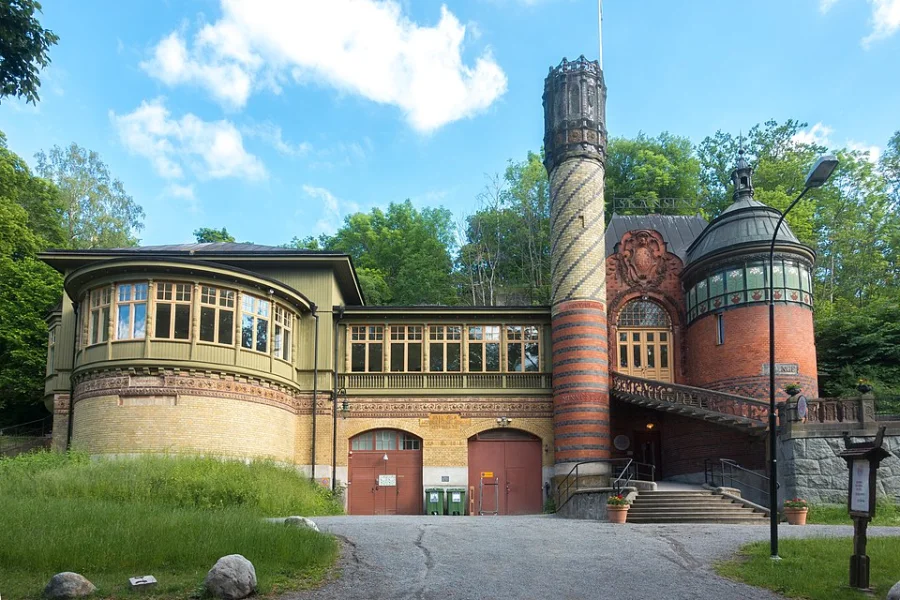
Skånska Gruvan
0:00 / 1:42Skånska Gruvan
Skånska Gruvan, located at Rosendalsvägen 14 on Djurgården in Stockholm, is a remarkable testament to Sweden’s industrial legacy.
Originally constructed in 1866 as Sweden’s pavilion at the Paris World Exposition, this distinctive red building was designed by the renowned architect Ferdinand Boberg. After the exposition, it was carefully dismantled, shipped to Sweden, and reassembled at its current site in 1867. The structure served as a showcase for the rich mineral resources of Scania and the advances in Swedish mining technology during the 19th century.
Over the years, Skånska Gruvan continued to play a prominent role in Swedish exhibitions and was an important part of the Stockholm Exhibition in 1897, which celebrated Sweden’s technological progress and cultural achievements. Notably, the building was once used as a venue for geology lectures and gatherings for the Swedish Geological Society, marking its importance in the scientific community. During the early 20th century, it became a central meeting place for researchers, engineers, and students who contributed to Sweden’s mining industry, which at the time was central to the country’s economic development.
In modern times, Skånska Gruvan has adapted to various uses, hosting events and providing historical exhibitions that help visitors trace the evolution of Sweden’s mining history. The high gabled structure, with its ornate wooden detailing, stands as one of Djurgården’s most exceptional architectural relics, offering a unique window into the industrial and cultural advancements that shaped modern Sweden. The continued preservation of the building ensures that its significant contributions to Swedish industry and culture will be remembered by generations to come.
59.32864, 18.10266