Stockholm City Hall
Back to all places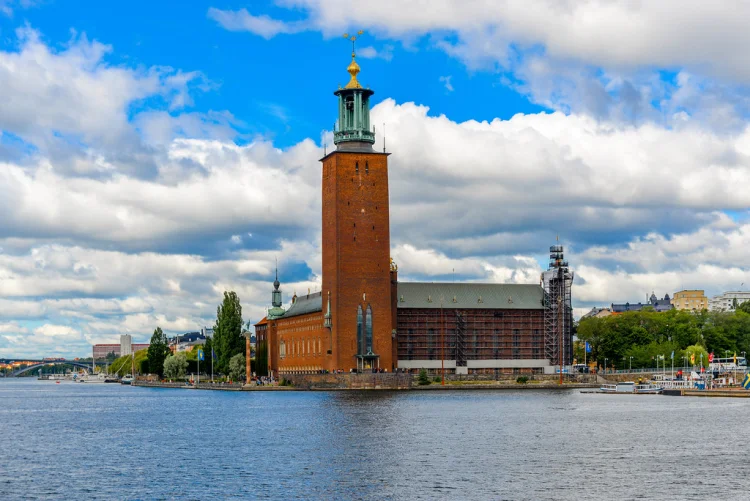
Stockholm City Hall
0:00 / 1:48Stockholm City Hall
Emerging as a masterpiece of national romanticism, Stockholm City Hall stands as an emblematic symbol of Swedish architecture and history. Designed by renowned architect Ragnar Östberg, its construction spanned over a decade, from 1911 to 1923, and the hall officially opened on Midsummer Eve, June 23, 1923. This striking edifice, gracing the shores of Riddarfjärden, boasts one of Scandinavia’s most iconic skyline features—an 106-meter tall tower crowned with three golden crowns, the national emblem of Sweden.
Inside its magnificent walls resides the Blue Hall, which notably hosts the Nobel Prize banquet each December, a prestigious event celebrating advancements in science, literature, and peace. The City Hall also encompasses the opulent Golden Hall, adorned with over 18 million glass and gold mosaic tiles depicting Swedish history. These intricate designs reflect the nation’s storied past, highlighting figures such as Saint Erik, Stockholm’s patron saint, and Queen Christina, known for abdicating her throne and pursuing a life of scholarly interests across Europe.
History buffs will appreciate the blending of various architectural inspirations, from the Italian Renaissance to Byzantine, which Östberg used to convey Sweden’s cultural synthesis at the time.
The hall serves as the seat of the municipal council and a prime location for state visits and civil ceremonies, playing a vital role in the civic and social fabric of Stockholm.
Throughout the years, Stockholm City Hall has witnessed numerous critical events, including the introduction of universal suffrage in Sweden in the early 20th century. The building itself stands as a testament to Swedish heritage and ingenuity, as well as a cherished venue resonating with historical significance and pride.
59.32782, 18.05516